

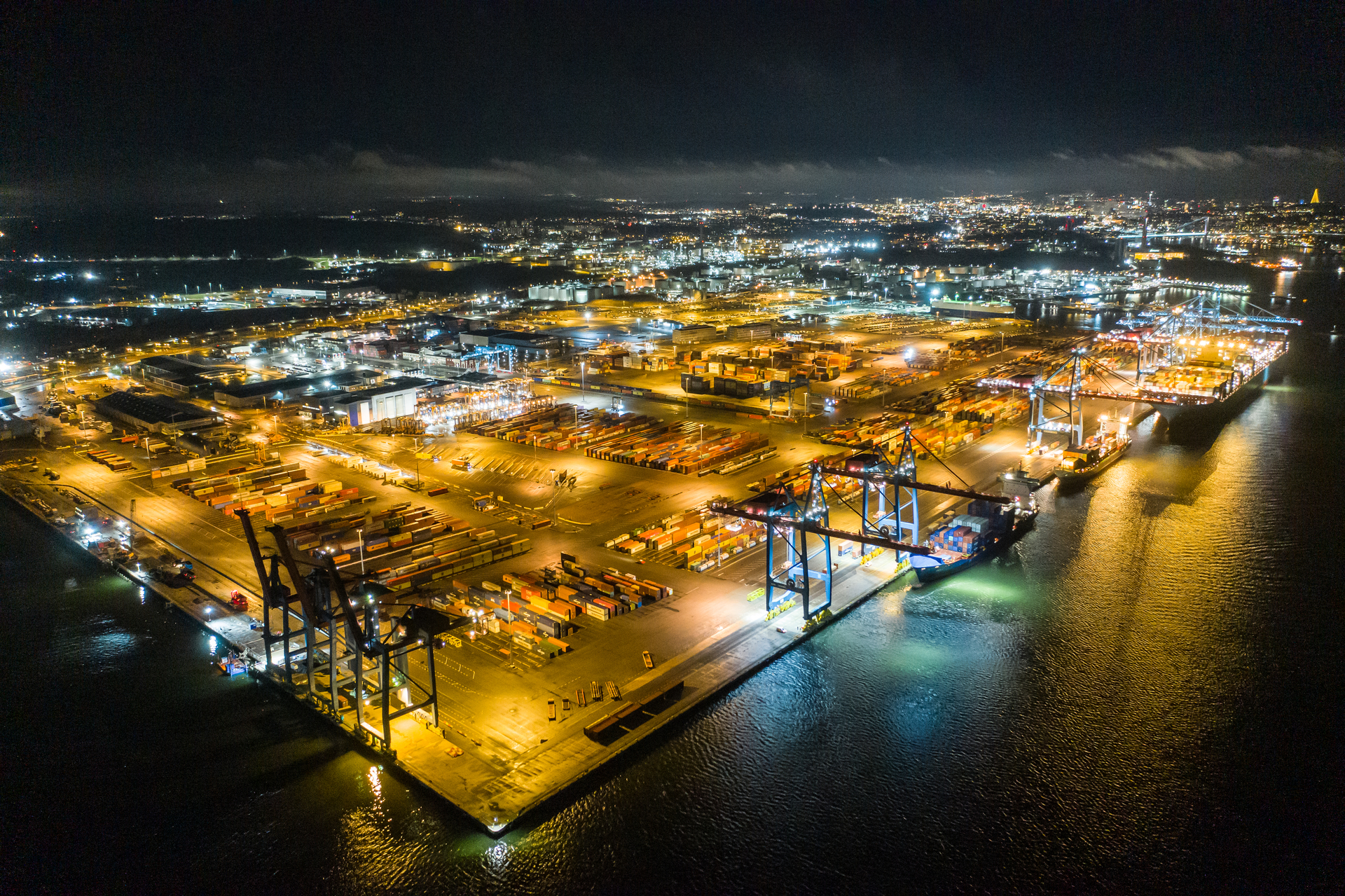
The joint project of the ports of Aarhus, Bremerhaven, Gothenburg, and Stockholm will receive €18.8 million from the Connecting Europe Facility (CEF) for the set-up of cold ironing infrastructure for container ships.
"The project is a direct response to new EU regulations that will come into effect in 2030, requiring ships over 5,000 gross tonnage to connect to onshore power [OPS] while moored. Through OPS, container ships will be able to use electricity from the grid instead of generating their own power on board using diesel engines. This resulting in a reduced climate footprint, cleaner local environments, and improved working conditions in the ports," the parties said in a press brief.
Anne Zachariassen, EU.OPS.Network's Project Coordinator and the Port of Aarhus' COO, added, "We are very pleased that the European Commission and the CEF Committee recognize our high ambitions for the green transition. As some of Northern Europe's most important ports, it's fantastic that we can collaborate to reduce the shipping industry's climate footprint, which is a global challenge we face together. OPS for container ships is a crucial part for all the ports involved."
Julia Christensson, Grants Manager at the Port of Gothenburg, detailed, "Through this project, The Port of Gothenburg will be able to build a high-voltage substation at the container terminal, which is a crucial part of the infrastructure needed to offer OPS to container ships. It is an investment of about €20 million, with nearly half of the funding coming from the project."
Her port estimates that by cold ironing in Gothenburg container carriers can spare the environment some 5,600 tonnes of CO2 emissions annually. The West Coast Swedish seaport has the ambition of reducing its carbon footprint by 70% in the port area by 2030. Gothenburg already has OPS in place at its ro-ro and ferry terminals, as well as in its energy terminal for tankers.
The EU.OPS.Network project, to last from 2024 to 2027, has a total budget of €37.61m.
Photo: Port of Gothenburg