

by Przemysław Myszka
The atmosphere became so dense, one began having the feeling that the fate of the entire universe was at stake. What followed was a bit of a tragicomedy, though. Reactions ebbed and flowed - "weak," "another significant step," "blocked progress," "regrets," "hopefully […] a historic moment," "insufficient," and so on (if you don't know what the other person is talking about, it's most likely about themselves - their hopes & fears, not necessarily the topic at hand).
The new IMO climate deal for shipping is done & dusted - but it isn't signed & sealed. The 'newborn' will also have to live - if it survives ratification, that is - with a stigma of the Trump-Musk cabinet dumping on it its fossil-fuel love letter. Yup, the 83rd gathering of the Marine Environmental Protection Committee was - for want of a better word - loud. Media outlets and the more LinkedIn-outgoing academia scrambled (oh, the typos & brachylogies!) pre- & post- the meeting to first convey the importance of April 2025 (#fomo) and, then to wrap their - and our - heads around what actually happened, what's that thing on the table, and what shipping - and countries hoping for a just and equitable transition - can do with it.
If somebody had (high) hopes for a repeat of the Montreal Protocol, well, wakey-wakey, it's 2025! Science & global/partisan politics aren't exactly in the same corner of the boxing ring (and one of them has a flamethrower...). Better don't look up (anybody remembers that prophetic movie?). As the ancient wisdom of cunctation goes: we'll see.
In the meantime, you can already see that the spring issue is yet again full to the brim with top-notch articles. Alike MEPC 83, it's a mix but of goodies only! Reads on port strategies to overcome modernisation challenges likewise the use of high-frequency data to beat shipping's biggest difficulties, onboard carbon capture, the importance of soft skills in maritime, overview of the recent wind energy market developments in Europe (more port capacity needed, pronto!) as well as why wind should be viewed as the free fuel for shipping, situational awareness in the digital navigation era, preparations for implementing the S-100 standard in sea navigation, using simulation (including Europe's very first XR Full Mission Bridge Simulator) to future-strengthen port & shipping workforces. Lastly, but crucially important, how to combat black mold (and other nasty stuff) on board vessels.
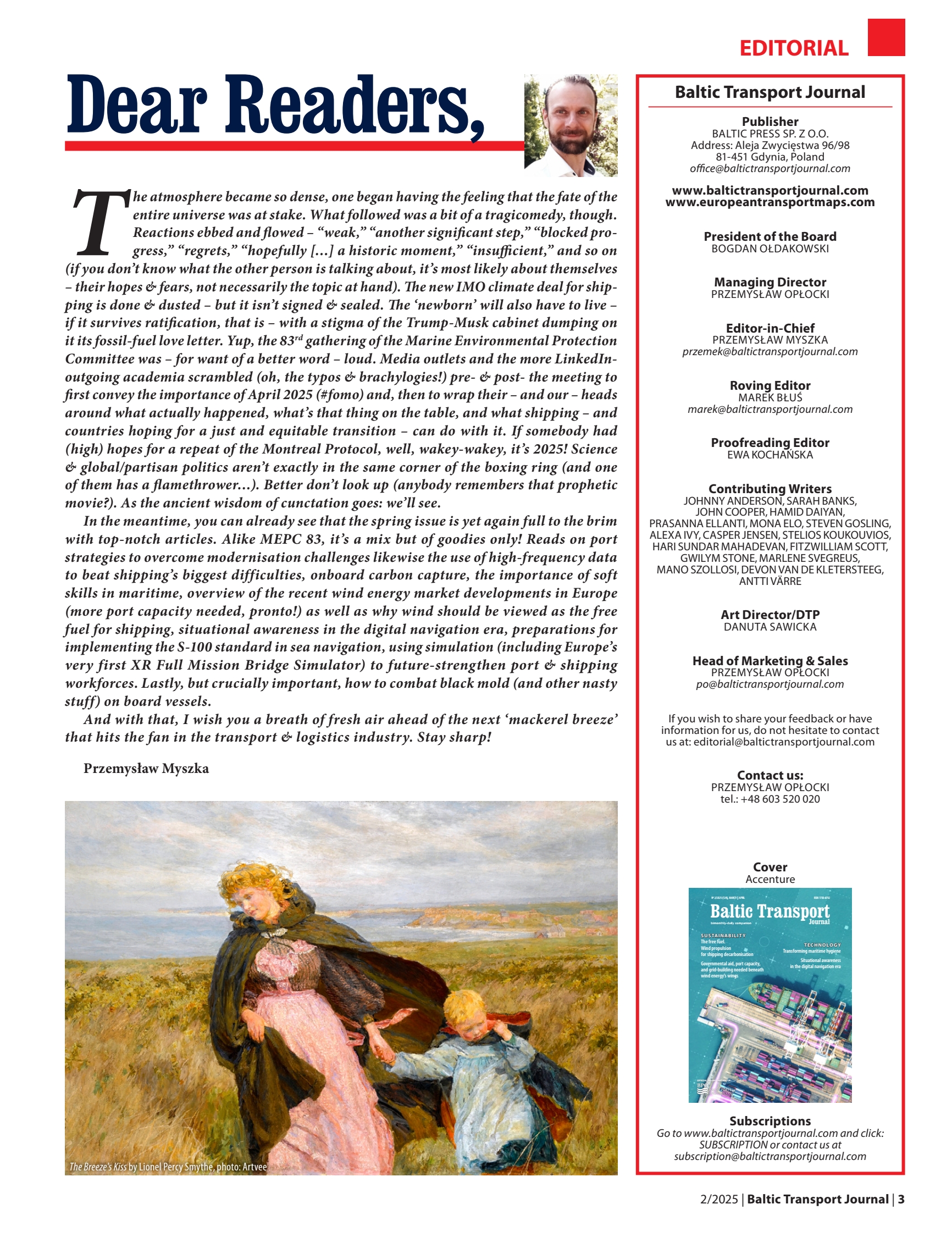
And with that, I wish you a breath of fresh air ahead of the next 'mackerel breeze' that hits the fan in the transport & logistics industry. Stay sharp!
Download PDF