

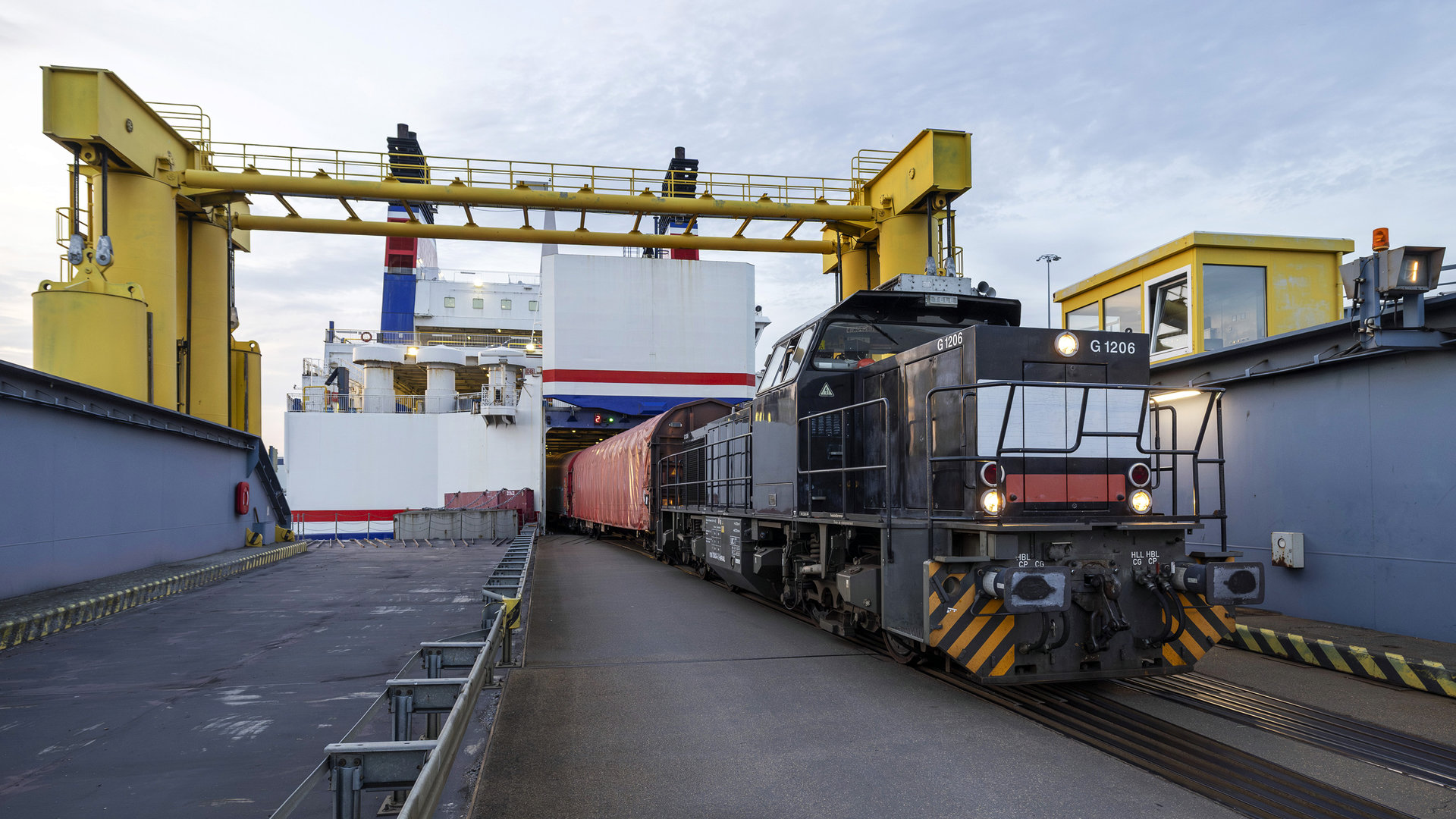
Stena Line and the Swedish Transport Administration have signed an agreement thanks to which the former's rail ferries will ply between Trelleborg and Rostock at least until the end of 2031.
Skåne (3,295 lane metres of overall carrying capacity) and Mecklenburg-Vorpommern (3,202 lm) are serving the route that has been in operation since 1998. In 2024-25, they transported nearly 42 thousand railcars.
"Stena Line is very pleased that the conditions are now in place for our operation on the Trelleborg-Rostock route to continue. We view our role in the transport system in general, and in the vital rail connection to continental Europe provided by our ferries in particular, with both pride and great responsibility," commented Elisabeth Lönne, Chief Commercial Officer at Stena Line.
Roberto Maiorana, Director-General of the Swedish Transport Administration, also shared, "I am pleased and proud that we have reached this agreement. This has been a priority for us, and we are now securing rail ferry services between Sweden and Germany for the years ahead."
He furthered, "Rail ferries have declined significantly over the past 20 years due to weak economic viability. Since the opening of the Öresund Bridge, the majority of freight trains to and from continental Europe have crossed the Öresund link rather than travelling by ferry. However, the ferries remain necessary [due to weight and width restrictions on Danish and German rail infrastructure, certain rail transports cannot cross the Öresund overland], which is why the Swedish state, through the Swedish Transport Administration, is now stepping in to secure continued operations."
Maiorana also underscored, "Through rail ferry services, we can maintain NATO's fundamental requirement for a robust transport system that supports national resilience. The transport system must function in peacetime, crisis, and war - both for domestic traffic and for transport to and from Sweden."
Malin Collin, the Port of Trelleborg's CEO, shared, "Trelleborg and Rostock together constitute one of the most important transport links between Scandinavia and the continent. In a time of increased demands on preparedness, defense capability, and robust logistics chains, it is crucial that we secure both traffic across the Baltic Sea and the conditions for efficient transport further into Europe. For redundancy to be sustainable in the long term, continued investments and a shared sense of responsibility are required in both Sweden and Germany. A resilient transport system requires strong links throughout the entire corridor."
Photo: Kasper Dudzik