

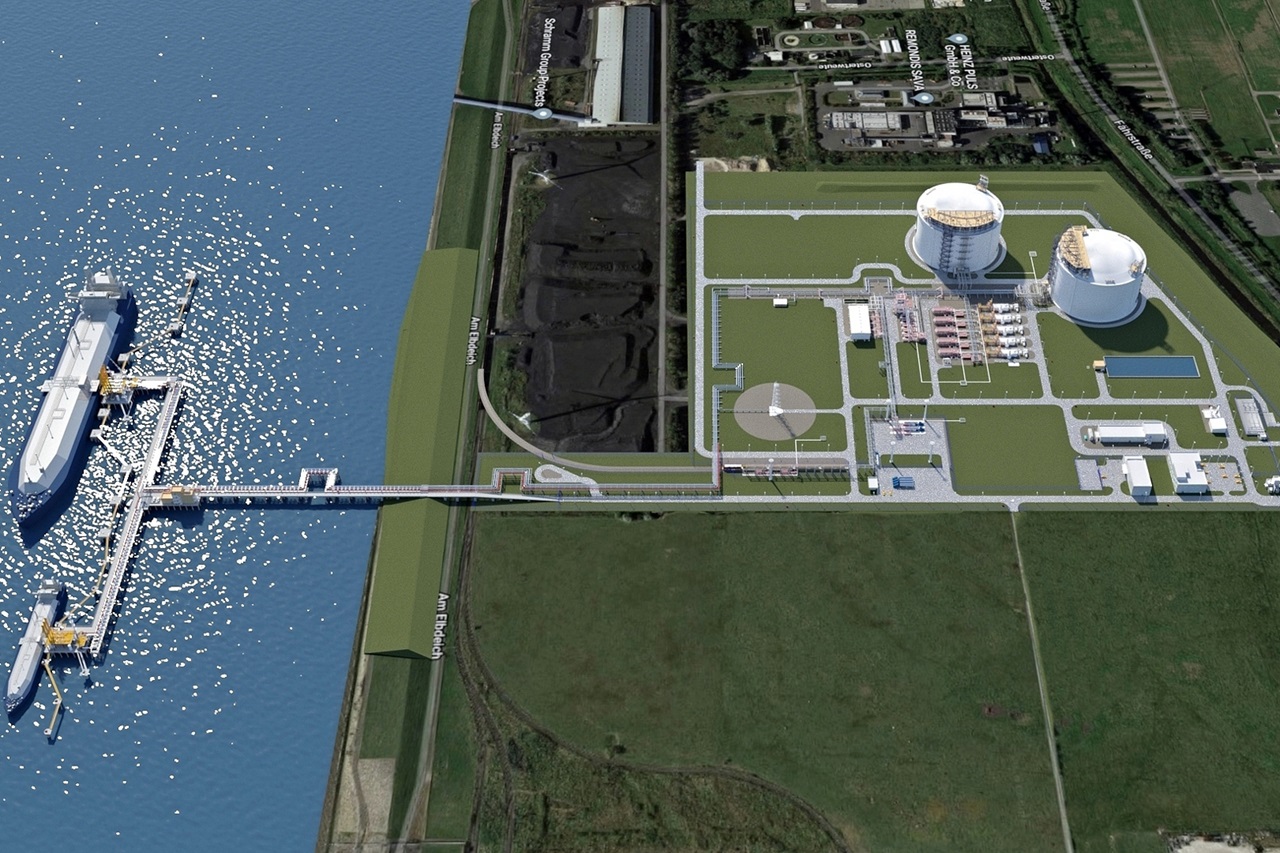
First, KfW (Germany's state-owned investment and development bank), Gasunie, and RWE have signed a memorandum of understanding for setting up an 8.0b m3/year facility for importing liquefied natural gas (LNG).
KfW will hold a 50% stake in the new terminal, with Gasunie operating it.
The terminal will be designed to allow for the future handling of green hydrogen derivatives, such as ammonia.
To support that end, RWE will erect another terminal in Brunsbüttel - for the import of green ammonia. Operations will start in 2026, making it possible to handle around 300kt/year of ammonia.
RWE will then install a cracker to produce green hydrogen supplied to the industry via a pipeline.
After expansion, the terminal will take in some 2.0mt/year.
"Russia's brutal war against Ukraine has made it abundantly clear that we must become independent of fuel imports from Russia. The LNG terminal in Brunsbüttel is an important element in this, as it will increase the capabilities to import gas to Germany. Green ammonia as a liquefied hydrogen derivative can make an important contribution to supplying Germany with green hydrogen. At the same time, we can gain important experience with this project for the conversion from LNG to green hydrogen or hydrogen derivatives," underlined Robert Habeck, Germany's Federal Minister for Economic Affairs and Climate Action.
Markus Krebber, RWE's CEO, added, "It is now more important than ever to think of climate protection and security of supply as one. That's what we are doing. On the one hand, we are involved in the forthcoming construction of the first LNG terminal in Germany. On the other hand, we are going to build an ammonia terminal at the site to forge ahead with the import of green molecules for the decarbonisation of industry. This flagship project will cover the entire value chain - from import, to conversion, transport and use by industrial customers. The entire site will benefit from this."
Photo: RWE