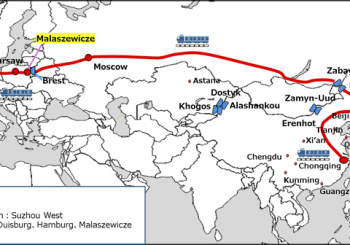
The company has started offering an intermodal solution that routes cargo from a number of Chinese, Korean, and Japanese ports to the Russian ones in Vladivostok and Vostochniy and then dispatches it by rail to St. Petersburg.
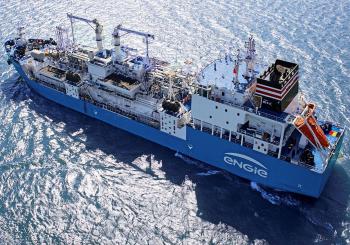
The Japanese NYK Line has handed over the 5,200 of m3 capacity liquefied natural gas (LNG) bunkering vessel which will now supply fuel across the Amsterdam-Rotterdam-Antwerp region.
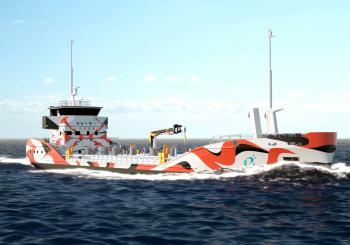
Kawasaki Heavy Industries (KHI) has selected the Orca energy storage system (ESS) from Corvus Energy to be installed on-board the all-electric e5 tanker in construction by the Japanese KOA Industry and Imura Shipyard for the also Japanese Asahi Tanker.
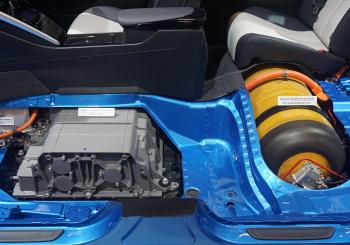
The two have partnered to develop and produce sustainable, large-scale, and modularised Proton Exchange Membrane (PEM) fuel cell systems for the international marine market.
Caterpillar (Cat) has entrusted the Japanese-Finnish duo with the delivery of an innovative package of electric drive train technology for a series of bulk carriers.
The combined service, launched in August 2019 in partnership with Modul and Global Ports, saw its first eastbound train dispatched from St. Petersburg on 28 March.
FESCO and RZD Logistics, a subsidiary of Russian Railways, have sea-linked the Chinese port with the Russian one in Vladivostok from which containers head to Europe by rail.