

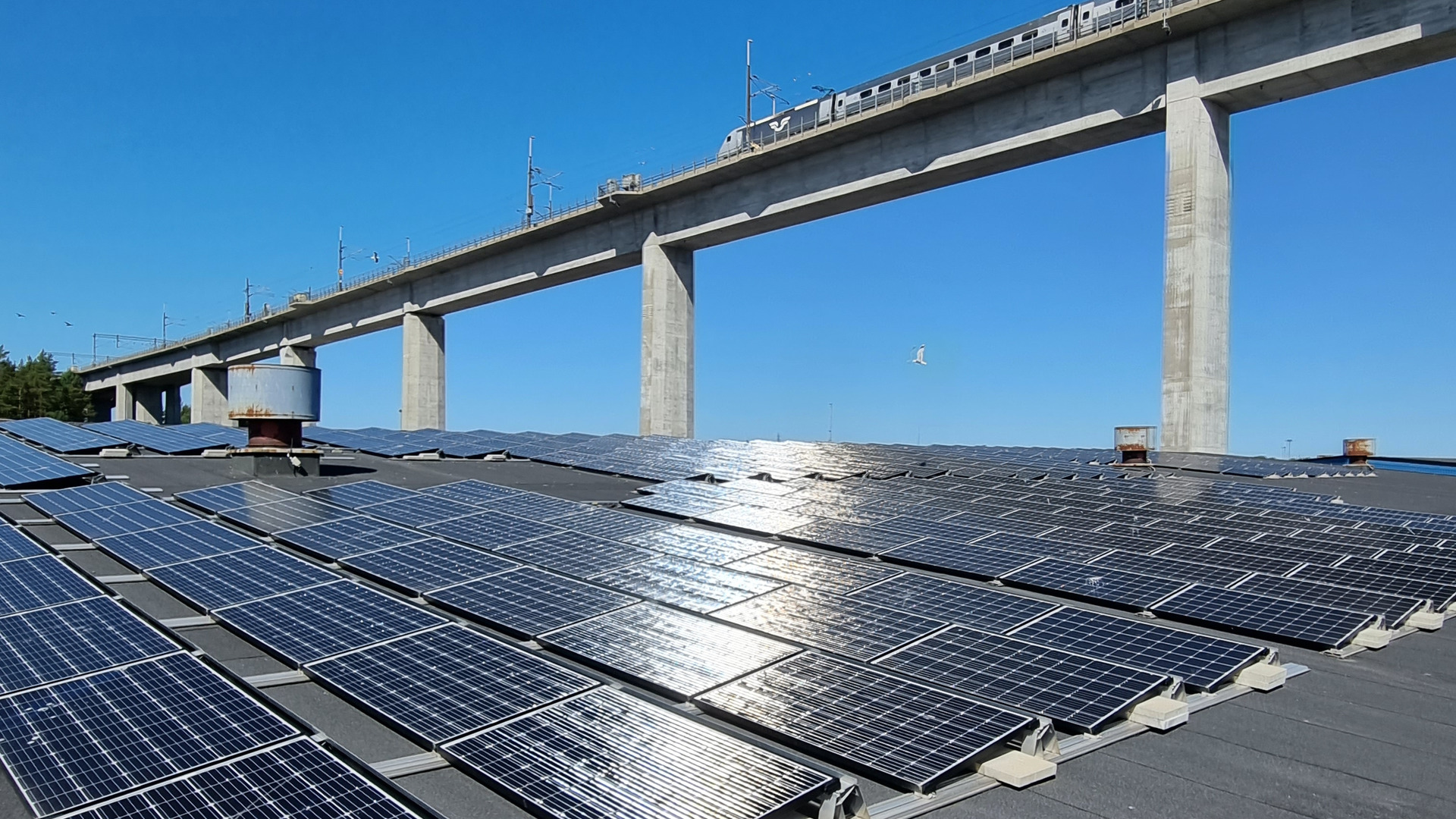
The Swedish municipality and its seaport have received SEK11m (about €940k) in EU support to scrutinise what it will take to improve & green their transport & logistics.
The feasibility study will look into the options & costs associated with increasing quay capacity, providing ships with onshore power supply, and building a new electrified railroad.
The project will also explore the prerequisites for developing the existing combined traffic terminal.
The partners also want to examine the set-up of charging stations for trucks that serve Sweden through Södertälje as well as the establishment of Tvetalänken, an electrified road leading to & from the port.
The funds will also be used to get stakeholders together to see how they can jointly work towards more environmentally friendly logistics, among others, by shifting more cargo from the road onto sea and rail.
"Industrial freight transportation in Europe needs to become more sustainable, and this here commitment we're taking in Södertälje increases the industry's competitiveness both locally and throughout the greater region [of Stockholm and Central Sweden]. With this, we're strengthening Södertälje as a cargo node in Europe. It is satisfying that the EU sees the same opportunities in Södertälje as we have in a long time," commented Alexander Rosenberg, responsible for technical affairs at Södertälje's municipality.
Måns Frostell, the Port of Södertälje's CEO, also said, "It is a more sustainable alternative to transport goods by sea, all the while we must develop our infrastructure to meet future client needs. This commitment secures the port's position as the region's cargo node even more than it's already today."
Södertälje intends to become a climate-neutral municipality by 2030. To that end, it wants its seaport and regional logistics to evolve into one of Europe's most sustainable transport nodes.
Meanwhile, the Port of Södertälje is investing to increase its annual solar energy harvesting capacity - from 255,000kWh to 410,000kWh by the end of this year, an amount that will cover 30-35% of the seaport's electricity consumption.
Photo: Per Fredman/Port of Södertälje