

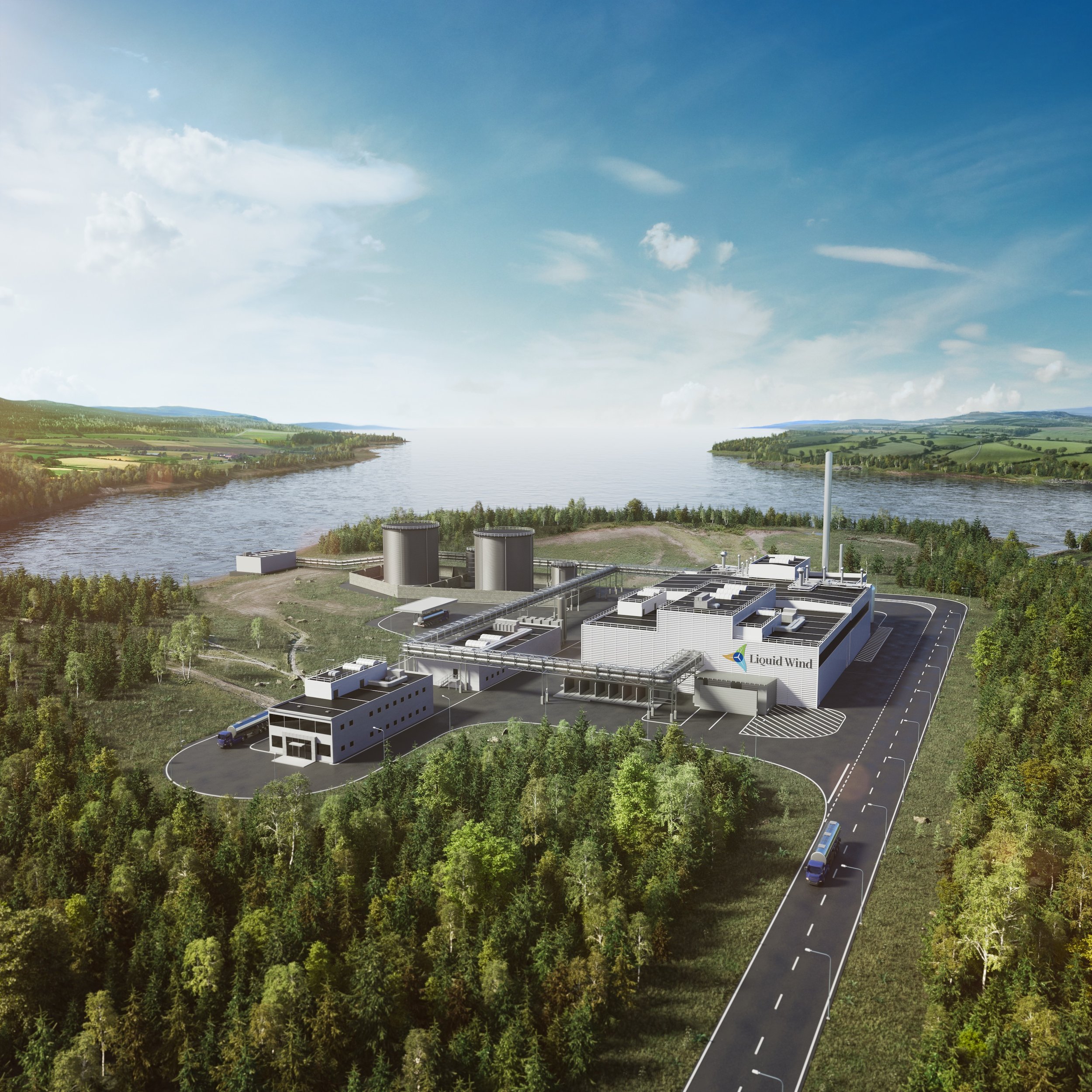
Liquid Wind, Alfa Laval, Carbon Clean, Siemens Energy, and Topsoe have strengthened their co-op to design ready-to-build core e-methanol plants (CMP).
The partners will focus on reducing the time, cost, and risk of developing CMPs to get ten additional e-methanol facilities in the Nordics by 2027 and a total of 80 standardised, 100kt/year capacity e-methanol units by 2030 (estimated to reduce CO2 emissions by 14 million tonnes yearly).
FlagshigONE, the first CMP developed by Liquid Wind, was purchased by the Danish energy company Ørsted, which is building the 50kt/year facility in the Swedish Örnsköldsvik (scheduled to come online in 2025).
Liquid Wind's FlagshipTWO and FlagshipTHREE, both 100kt/year, will be erected in Sundsvall and Umeå, respectively. The former can start producing e-methanol in late 2025/early 2026, while the latter possibly in 2026.
The projects target the shipping business as the primary client for their (fuel) product.
"We are very pleased to be a part of this important e-fuel project, which is an essential building block for the decarbonisation of shipping and the overall race to reach net zero. We strongly believe in partnership to win that race and develop the right solution from the start [...]," commented Julien Gennetier, VP Energy Division at Alfa Laval.
Aniruddha Sharma, Chair and CEO of Carbon Clean, said, "Our continued partnership with Liquid Wind demonstrates the role carbon capture must play in decarbonising hard-to-abate sectors, such as shipping. Carbon Clean's modular point-source carbon capture technology is the most efficient and cost-effective means of decarbonising many industries, and it will play a vital role in accelerating e-methanol facilities. I look forward to collaborating with the other industry leaders on many more projects to come - showcasing the U in CCUS as a perfect utilisation example."
Sundus Cordelia Ramli, Chief Commercial Officer P-to-X at Topsoe, urged, "At Topsoe, we're thrilled to collaborate with other decarbonisation leaders on this project, driving a faster transition towards a sustainable shipping industry. The sharp rise of CO2 emissions within the maritime sector (to 5% in 2022) is a stark reminder of the urgency of our collective mission. Inspired by Liquid Wind's visionary approach and united by the pioneering spirit of the project's leaders, we stand poised to demonstrate that, when harnessed, the technology available today can propel a swift transition to a more sustainable maritime future. The time for change is now. This endeavour exemplifies the accelerated progress possible through industry-wide collaboration, and we're deeply honoured to be at the forefront of this pivotal transformation."
Photo: Liquid Wind