

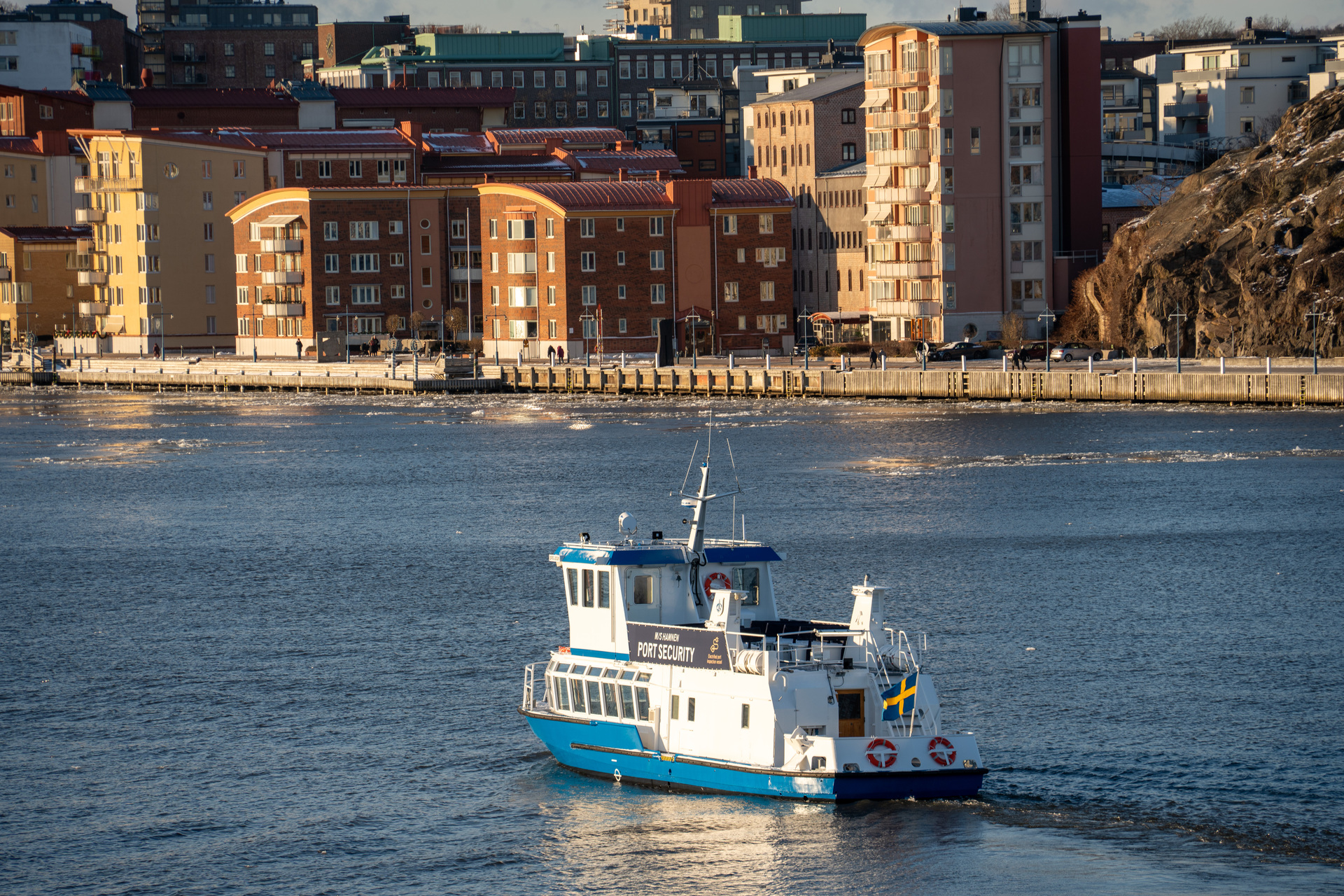
The 1979-built Hamnen underwent conversion at the Ö-varvet shipyard by getting a 250kW motor and 520kWh battery pack in place of a diesel engine.
The Port of Gothenburg Authority (GPA) underlined in a press release:
Hamnen is in active operation for approximately 1,200 hours per year. With the previous engine, the vessel consumed 25,000 litres of diesel, resulting in 67 tonnes of carbon dioxide emissions - equivalent to 15% of the Gothenburg Port Authority company's total emissions - which are now eliminated.
The battery system can be expanded if need be, plus there's an auxiliary diesel engine as a backup. The 20.3 by 5.7-metre vessel is charged via a 125-amp charger at its home quay.
The conversion investment totalled SEK19.8 million (around €1.7m).
David Falk, Hamnen's Skipper and Project Manager in charge of the ship's electrification, highlighted:
During the testing period, we noticed that the range was significantly better than we had anticipated despite winter testing. The goal is to operate on electricity 90% of the time, but so far, we have not needed to switch to the diesel engine even once to extend the range [6-7 hours at ecospeed].
He added:
Furthermore, the onboard working environment has significantly improved thanks to the new bridge and, not least, the quiet electric propulsion. Overall, it's a highly successful project in every way, and I want to thank everyone involved, from the Swedish Transport Agency to Ö-varvet and all other suppliers and partners who have been involved in various ways.
Viktor Allgurén, Head of Innovations at GPA, also underlined:
The electrification of Hamnen is important as the vessel is a symbol of the Port of Gothenburg as its inspection and representation vessel. We have high expectations that all actors in the port contribute to reducing emissions, then we must lead the way and set an example.
The current Hamnen is the third inspection vessel bearing that name. The first went into operation 100 years ago.
Photo: Port of Gothenburg