

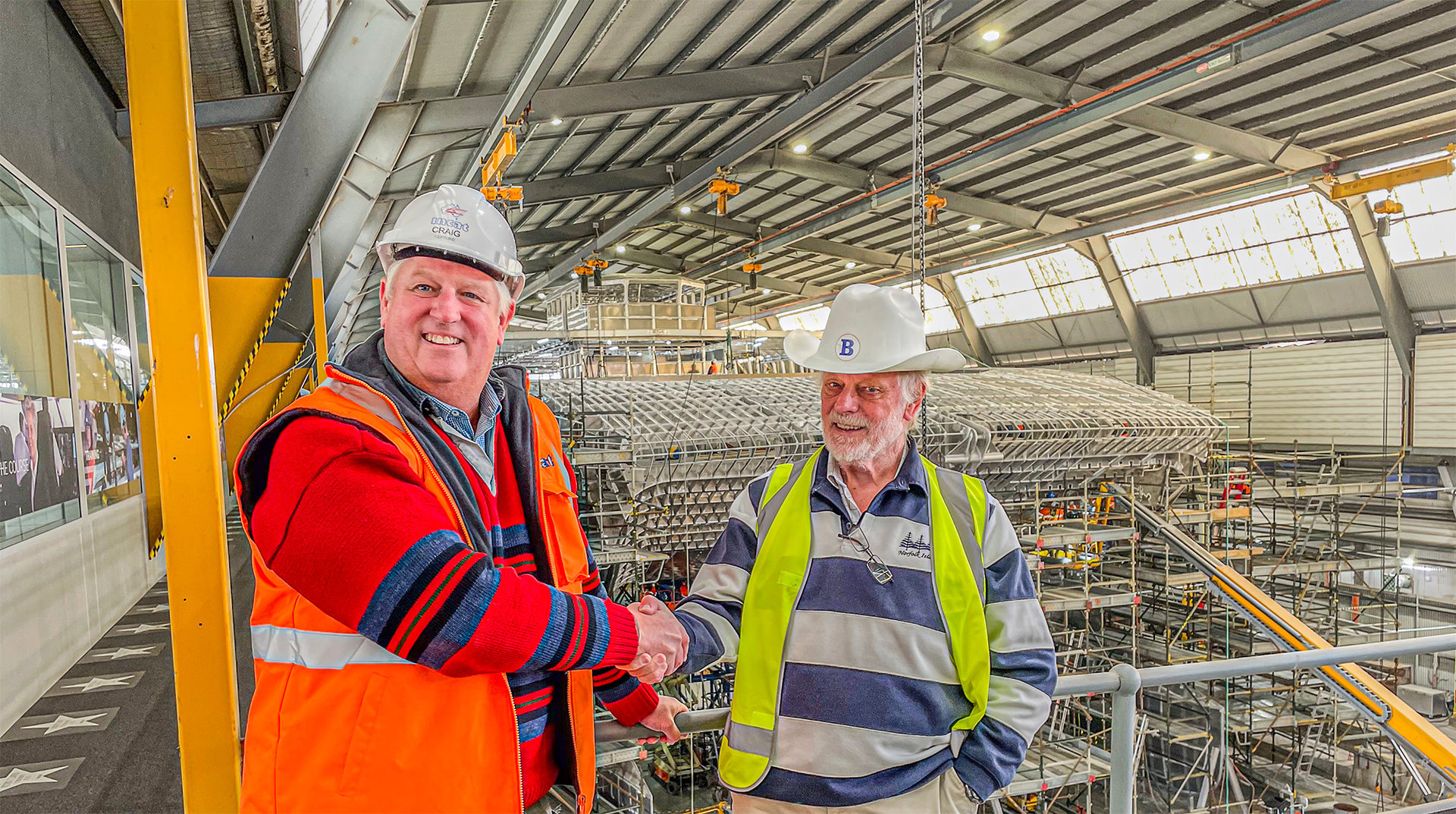
Incat's shipyard in Tasmania has been entrusted with constructing two battery-powered high-speed ferries for the Danish shipping line (which is also eyeing a third one).
The first 129-metre-long and 30.5-metre-wide e-catamaran, able to transport 1,483 passengers and 500 cars, will enter Danish waters around the turn of 2027 and 2028.
Discussions are ongoing with multiple shipyards capable of delivering a vessel identical to the first two.
Each ferry will have 45,000kWh battery packs, enabling 40+ knot speeds.
Apart from new tonnage, the DKK3.5 billion (€470 million) investment involves associated onshore infrastructure. Charging the ferries will be possible both in the Aarhus and Odden ports. When plugged in, a single catamaran will charge with 15kV AC at 55,000kW for 30 minutes - receiving an average of 25,000kWh of energy before its next journey (enough to power an electric car for a 150,000-kilometre drive).
"Molslinjen's fast ferries were specifically mentioned in the Danish green tax reform - a package of political initiatives aimed at reducing greenhouse gas emissions and accelerating the green transition. As a result, Molslinjen has now applied for support from the government's green funding program to help finance the electrification of its Kattegat operations. The possibility of state support has been the decisive factor behind the company's decision to place the order," the company highlighted in a press release.
"This is a massive undertaking, involving not just the three ferries but also extensive land-based infrastructure projects and energy storage systems for the new ships. We now have two and a half years to get ready for full electric operation on the Kattegat. It's a fantastic milestone for our company. We are among Denmark's five largest CO2 emitters, and with support from the fund, we and the government now have a chance to remove 132,000 tons of CO2 emissions from Denmark's climate footprint each year," outlined Kristian Durhuus, CEO of Molslinjen.
Carsten Jensen, CEO of Nordic Ferry Infrastructure (owner of Molslinjen), added, "For many years, Molslinjen has been critical infrastructure, creating cohesion by forming a floating bridge between Jutland and Zealand. Now, we're making that floating bridge significantly greener - setting a milestone in the green transition for ferry operations and for Denmark."
Robert Clifford, Incat Chairman, also commented, "These new vessels for Molslinjen mark a turning point not just for Incat but for the global maritime industry. They are part of a new class of high-speed, low-emission ships that are redefining what's possible at sea. We're honoured to again partner with Molslinjen, and proud to help them deliver real environmental change on one of Europe's busiest ferry routes. Incat has a long and trusted relationship with Denmark through our work with Molslinjen, and I'm particularly proud to see this next chapter unfold. These vessels will connect communities across the Kattegat with high-speed, clean energy technology, and they'll be built right here in Tasmania."
Photo: Incat Tasmania