The Świnoujście-Ystad Maritime Link project has received €34m from the European Commission, which will cover approx. 26% of all expenses, set to amount to €132m.
The company has leased out three brand-new freight locomotives manufactured by the Polish Newag, which will be chiefly used to carry dry bulk goods on the routes connecting southwest Poland with OT's sea terminals in Gdynia and Świnoujście.
The SeaShuttle project has been awarded €6m by the government of Norway to work on launching onto the market autonomous container ships powered by fuel cells.
Effective from 1 January, trains on the Duisburg-Gądki/Pruszków route stop at the CLIP Intermodal Container Terminal in Swarzędz instead of Gądki and at PKP Cargo Connect's facility in Warsaw-Praga in place of Pruszków.
Year 2018 is drawing to its conclusion. The past months, alike life itself, were full of ups and downs. It was a real Dickens of a job putting all the issues of the Baltic Transport Journal and the Harbours Review together - dozens of articles and hundreds of news items and Market SMSes, not to mention all the add-ons, such as our maps or the Baltic Yearbook.
The Swedish shipping line will put in place a new route as of early January, linking the Finnish Pietarsaari with the ports in Lübeck, Zeebrugge, and Tilbury.
The hull of the 160 m-long ferry, welded in Gdynia by Crist, has landed in the Norwegian Ulstein shipyard, where it will be outfitted over the coming months in order to hand it over to Color Line next summer.
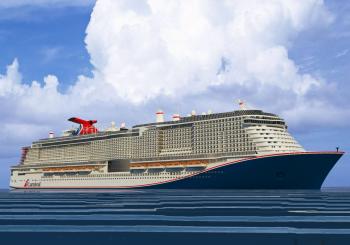
The Meyer Turku shipyard has started to work on the Carnival XL1 project, a GT 180k-big cruise ship that, once delivered, will be the biggest in the fleet of the Miami-based Carnival Cruise Line.
The ro-ro vessel has been sold to Blue Origin, a company set up the Jeff Bezos, owner of Amazon, the aim of which is to offer trips, first to the outer layers of Earth's atmosphere and into the space in the future.