DB Schenker, Ekornes, Naval Dynamics, Kongsberg Maritime, and Massterly have partnered to develop a next-gen waterborne transport solution for the Ikornnes-Ålesund route in Norway.
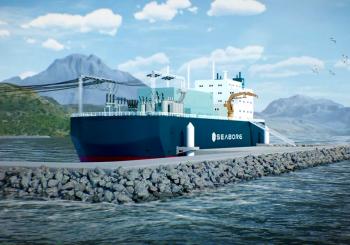
Backed by NOK89m (about €9.1m) from the country's Green Platform, a consortium develops shore and floating stations for tanking vessels with green ammonia as a marine fuel.
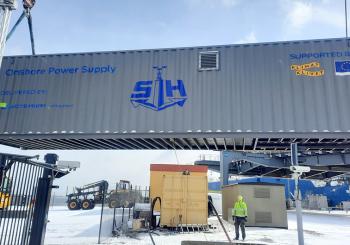
The Ports of Stockholm, operator of the harbour in Kapellskär, has taken delivery of the central onshore power supply (OPS) unit, provided by Actemium.
The Port of Antwerp has initiated a competition to prove a winner for the best solution that prevents losing plastic pellets when loading bulk trucks from silos.
Mærsk Mc-Kinney Møller Center for Zero Carbon Shipping has partnered with the ports of Hamburg, Gdynia, Rønne, Rotterdam and Tallinn to advance the decarbonisation of the maritime industry.
The European Maritime Safety Agency (EMSA) and Germany's Federal Maritime and Hydrographic Agency will be using a remotely-controlled drone to measure the sulphur content in the ships' exhaust plumes.
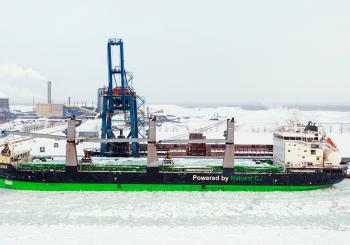
The project partners - including Uniper, ABB Sweden, the Port of Luleå, and Luleå Energi - will work on producing and marketing fossil-free hydrogen to transport and industrial customers as an alternative for fuel, electricity, and heat generation.
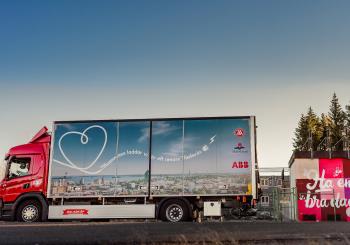
The Swedish freight haulier has received its first electric truck from Scania to operate it 10k km/year with an 89% lower carbon footprint than a traditional lorry.
The Korean Samsung Heavy Industries (SHI) and the Danish developers of the compact molten salt reactor (CMSR) technology have partnered to manufacture and sell turn-key floating nuclear power plants.
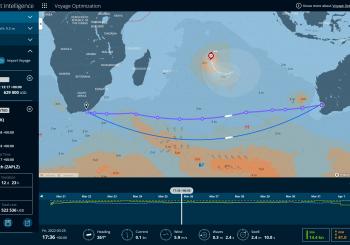
Thanks to the partnership, NAPA Voyage Optimization software will come as an option in all future sales of Norsepower's Rotor Sails solution, applicable to newbuilds and retrofits.