

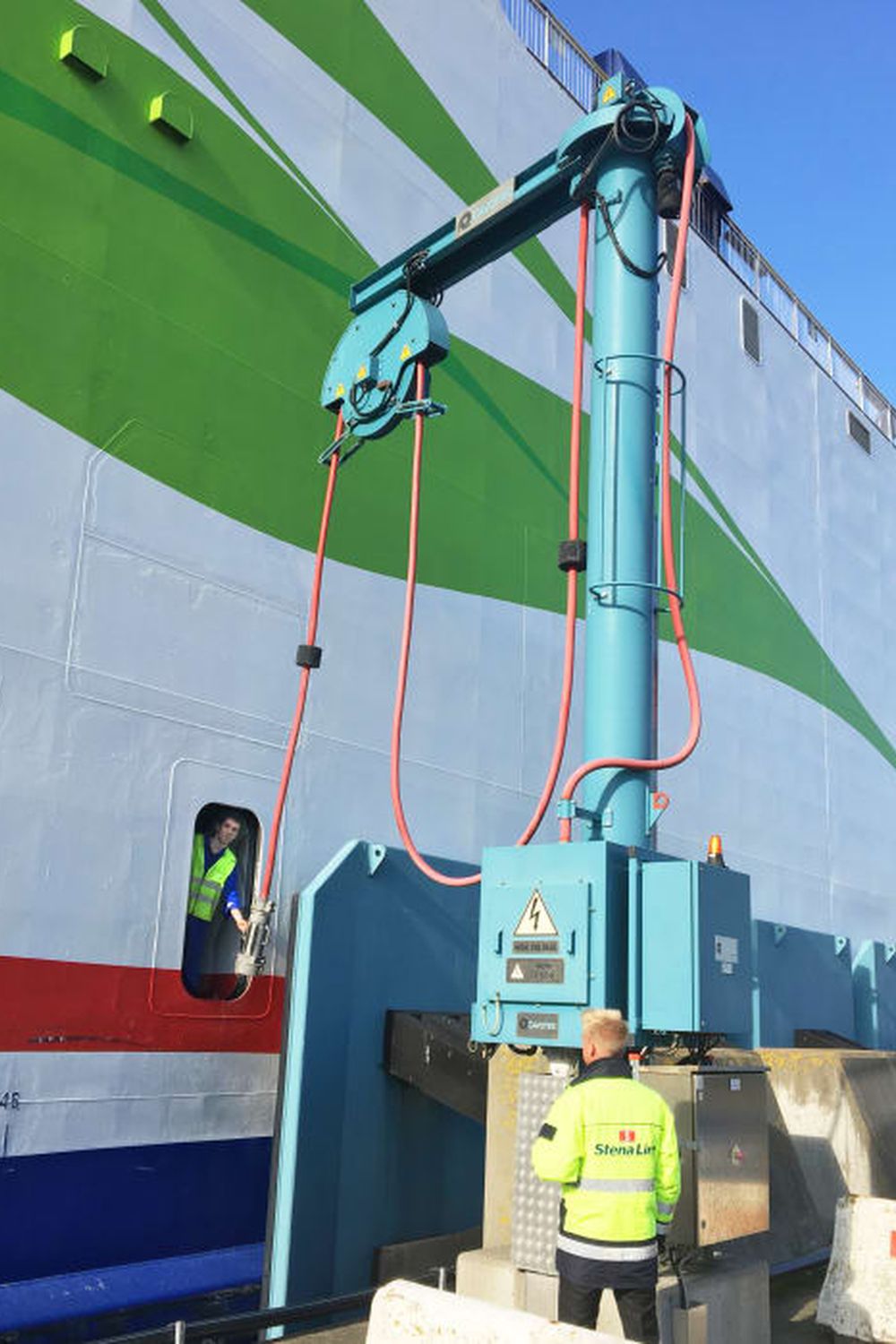
Stena Line's vessels are connecting to the grid if their port call exceeds two hours. In the case of the two ferries serving the traffic between Trelleborg and Rostock, theyll be cold ironing at the Swedish port 10 times out of their 16 weekly dockings.
"Sustainability is one of the cornerstones of our strategy and this is an important contribution to our efforts by reducing emissions and cutting down on noise in port. On many of our ferry routes our vessels call at locations close to cities and this makes it especially important to be able to shut off the engines when docked," Niclas Mårtensson, CEO, Stena Line, commented.
At present, 17% of ports in Stena Line's network offers OPS. In Sweden alone, four out of six seaports at which the company's ships call have OPS. "Planning work is under way to enable us to connect vessels in more of our ports. The objective is for 25% of the ports we use to have an electrical connection by 2020 and 75% by 2030," Mårtensson added in this regard.
Last year, Stena Line cut its CO2 footprint by 12,500 tn with the use of OPS, a yearly equivalent of emissions from 6,500 passenger cars.
Jörgen Nilsson, CEO, the Port of Trelleborg, also said, "It's really great that Stena Line has decided to connect two of its vessels to the onshore power supply at the Port of Trelleborg. The work and planning for the installation has taken several years and the Port of Trelleborg received a grant from the EU for the investment, which will reduce both emissions and noise from docked vessels."
Photo: Stena Line