The report The Great Integration: How connected maritime technology is unlocking compounded value across performance, compliance and operations, by Danelec and Thetius, offers an industrywide analysis of how digitalisation shapes decision-making in shipping.
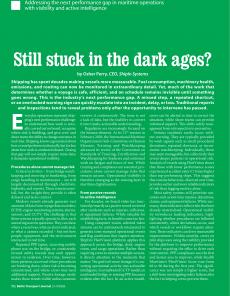
Shipping has spent decades making vessels more measurable. Fuel consumption, machinery health, emissions, and routing can now be monitored in extraordinary detail.
Hellmann Worldwide Logistics is a global logistics provider with a strong presence across the Baltics, offering reliable air, sea, road, and contract logistics solutions tailored to regional and international customer needs.
The ECG General Assembly & Spring Congress 2026 took place on June 4-5 at the Çırağan Palace Kempinski, a former sultan's palace. The Polish accent in the name points to the roots of the hotel chain, which originates from the Polish-Jewish-German entrepreneur Berthold Kempinski.
Shipping is like physics. At the 'quantum' level of haphazard news feeds, not a day goes by without an item about this-and-that forward-looking company investing in such-and-such energy efficiency measure (EEM) or even ordering a newbuild that's 'ready' to run on x-future fuel. But take an astronomical step back and the green part of shipping becomes something else entirely - a handful of pebbles swallowed by the endless sand of the broader seascape.
Safety in cargo handling has never been a fixed point. It evolves, sometimes gradually, sometimes in more decisive steps, shaped by operational experience, technological progress, and, often, by hard lessons learned.
Safety innovation is not confined to one aspect of the operation. It is continuously emerging across training, equipment design, digital systems, cargo integrity, and the critical interface between people and machinery.
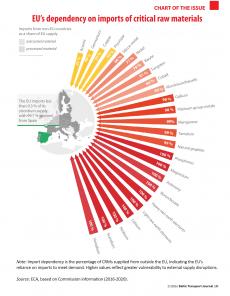
One of the latest reports from the European Court of Auditors (ECA) analyses the strategic importance of critical raw materials (CRMs) to the EU's goals towards climate neutrality - unsurprisingly revealing a too heavy dependence on imports, with supply chains concentrated in a handful of non-EU countries.