

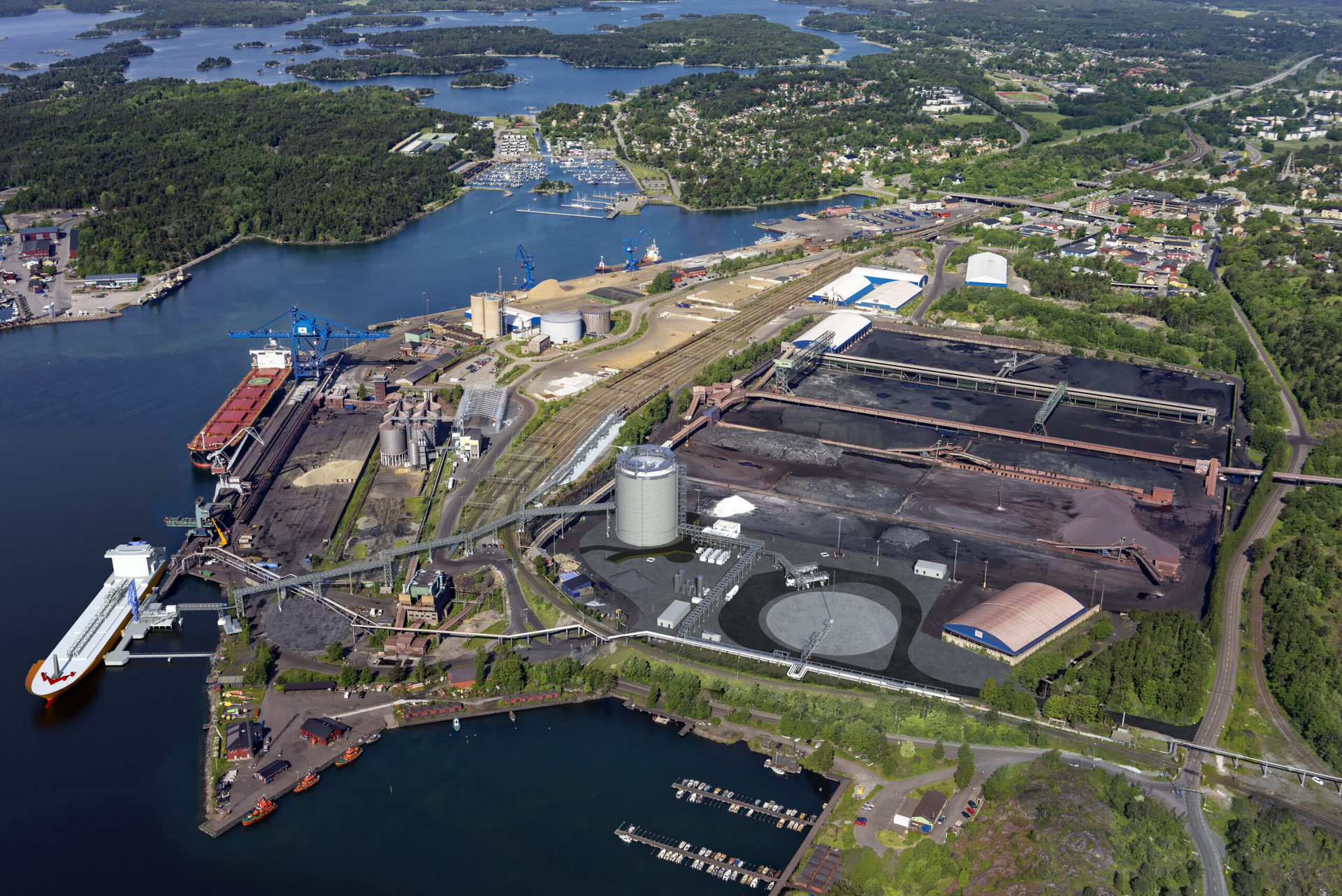
Avenir LNG and the Port of Oxelösund have signed a memorandum of understanding for the development & construction of a liquefied natural gas (LNG)/bioLNG terminal in the Swedish seaport.
Avenir LNG intends to acquire a 100% stake in OxGas AB, the wholly-owned dedicated project company of the Port of Oxelösund that has secured all environmental and construction permits required for setting up the up to 30k m3 terminal.
This "[...] represents a unique opportunity for Avenir to commence construction of the terminal at a shorter lead time following finalisation of the detailed design and subject to satisfactory due diligence and internal approvals," Avenir LNG underlined in a press release.
The OxGas Terminal will comprise a single full-containment atmospheric tank, natural gas delivery via regasification to a local pipeline network and LNG via two truck loading bays for broader distribution beyond the port.
The companies have also agreed to evaluate the development of a future energy hub to transition from LNG/bioLNG to renewable energy sources. Among others, Avenir and the Port of Oxelösund will evaluate CO2 reduction schemes toward a fully-renewable net-zero energy facility.
"We are pleased to announce this MOU with the Port of Oxelösund, this project offers a key strategic growth opportunity for Avenir and advances our stated strategy of becoming the leading small scale LNG supplier. The challenges facing the European gas markets have re-enforced Avenir's commitment to investing in critical infrastructure and supply chains which enhance energy security in regions of stranded demand and further enable the switching to cleaner, greener and more sustainable forms of energy," Peter Mackey, CEO of Avenir LNG, commented.
Douglas Heilborn, the Port of Oxelösund's CEO, also said, "Teaming up with Avenir LNG will allow us to proceed into the next phase with our Oxgas project and we are convinced Avenir is the right partner to work with. The demand for alternative fuels such as LNG/LBG will grow in the shipping industry within the Baltic Sea. A key component for sustainable shipping is developed infrastructure for such fuels. Having access to terminals is important as it will create opportunities for new shipping solutions."
Photo: OxGas AB