

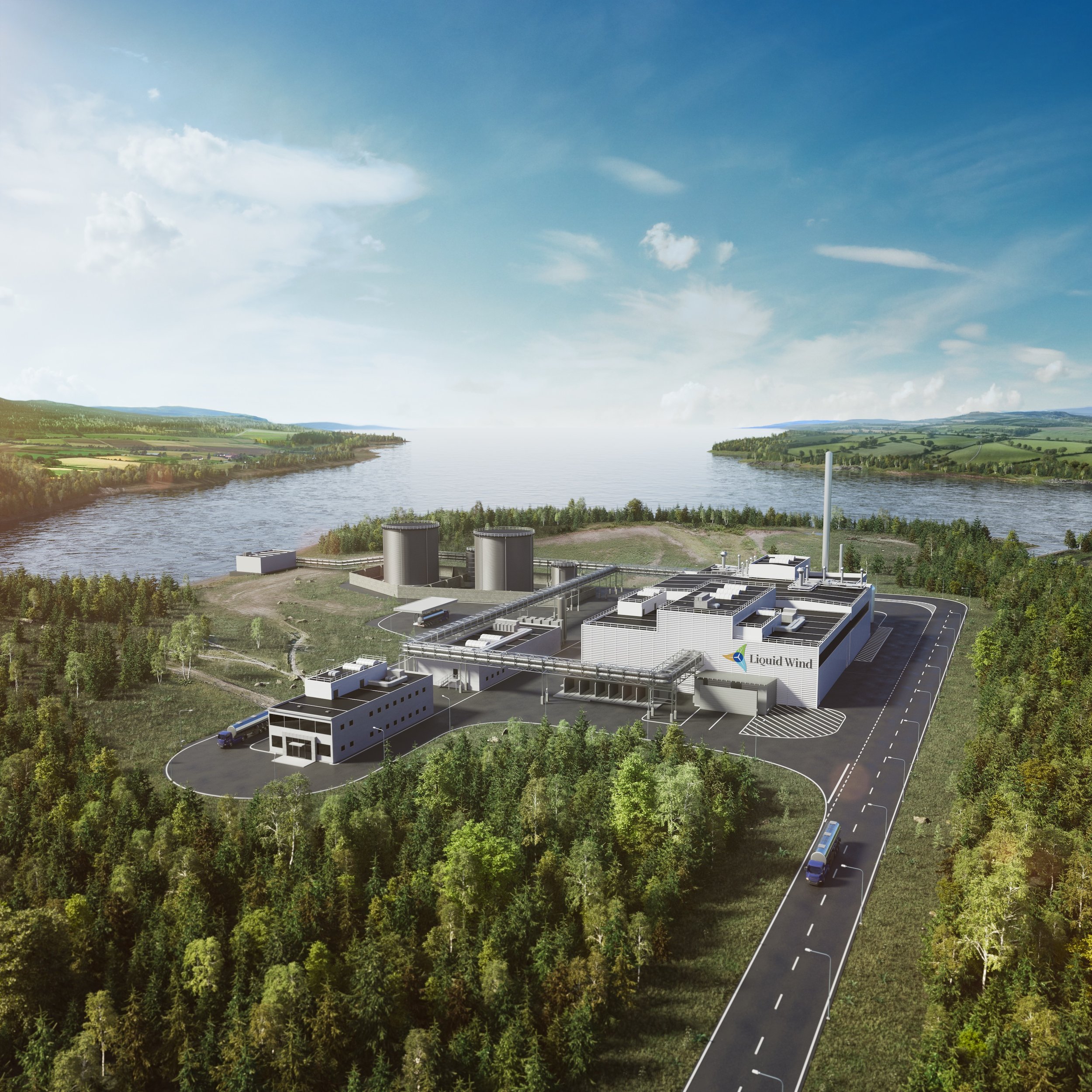
Liquid Wind, Alfa Laval, Carbon Clean, Siemens Energy, and Topsoe inaugurated their Design & Performance Centre (DPC), tasked with driving technological progress, strengthening production capacity, and bringing in-demand e-fuels to market at scale.
Specifically, the joint research & development department will work on blueprinting ready-to-build e-methanol plants (capacity of producing 100 thousand tonnes of e-methanol per year).
In November 2023, the parties teamed up to reduce the time, cost, and risk of developing such plants, with plans to get ten additional e-methanol facilities in the Nordics by 2027 and a total of 80 standardised, 100kt/y capacity e-methanol units by 2030 (estimated to reduce CO2 emissions by 14 million tonnes yearly).
Claes Fredriksson, CEO and Founder of Liquid Wind, commented:
We are delighted to be inaugurating the eFuel Design & Performance Centre, and to contribute with the project development know-how required for driving the electrification of the transportation sector. Our unique and long collaboration will continue to lead the green transition and production of sustainable fuels.
Anne-Laure de Chammard, Executive Board Member at Siemens Energy, added:
There will be no energy transition without green molecules. But for green hydrogen and eFuels to become a sustainable and competitive alternative, we need scalable, standardised, and optimised production facilities. The joint work of all partners in this Design & Performance Centre will make a significant contribution to getting this new industry up and running as quickly as possible.
FlagshigONE, the first plant developed by Liquid Wind, was purchased by the Danish energy company Ørsted, which is building the 50kt/year facility in the Swedish Örnsköldsvik (scheduled to come online in 2025).
Liquid Wind's FlagshipTWO and FlagshipTHREE, both 100kt/y, will be erected in Sundsvall and Umeå, respectively. The former can start producing e-methanol in late 2025/early 2026, while the latter possibly in 2026.
Photo: Liquid Wind