

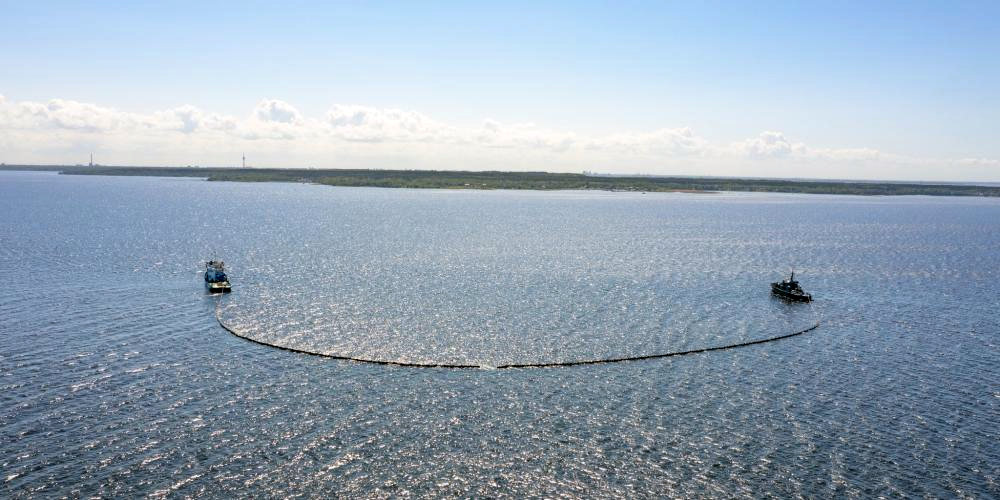
The €2.9-million project, funded by the EU Interreg Central Baltic Programme, will see the development of smart surface vessels equipped with pollution detection sensors.
These small units, designed to operate in the Gulf of Finland, will "[…] eventually be able to operate autonomously or support larger pollution response operations, improving monitoring capabilities and response speed," the Estonian State Fleet said in a press brief.
Its Director of the Development Service, Hannes Ojangu, detailed, "In the project's first phase, existing pollution detection technologies will be mapped, and the most suitable solutions selected for the project. New equipment will be tested in a trial basin in Finland and then in Estonian waters to verify their performance in real conditions."
He furthered, "The project will also create a unified service concept and data processing platform that enables real-time monitoring and effective cooperation between different parties."
Ojangu also underlined, "This is a significant step in cross-border environmental cooperation between Estonia and Finland and a contribution to strengthening pollution response capabilities across the Baltic Sea region. At the end of the project, guidelines and technical documentation will be produced to enable the developed solutions to be used elsewhere."
The partner team of DIGIMARIS includes the Kotka Maritime Research Centre (lead partner), the Estonian State Fleet, South-Eastern Finland University of Applied Sciences (Xamk), Kymenlaakso Rescue Services, and TalTech's Estonian Maritime Academy. Additionally, the Estonian Navy and the Estonian Rescue Services Agency's experts will guide pollution control.
The September 2025-started project will last for 30 months, concluding in the spring of 2028.
Photo: Jarek Jõepera