

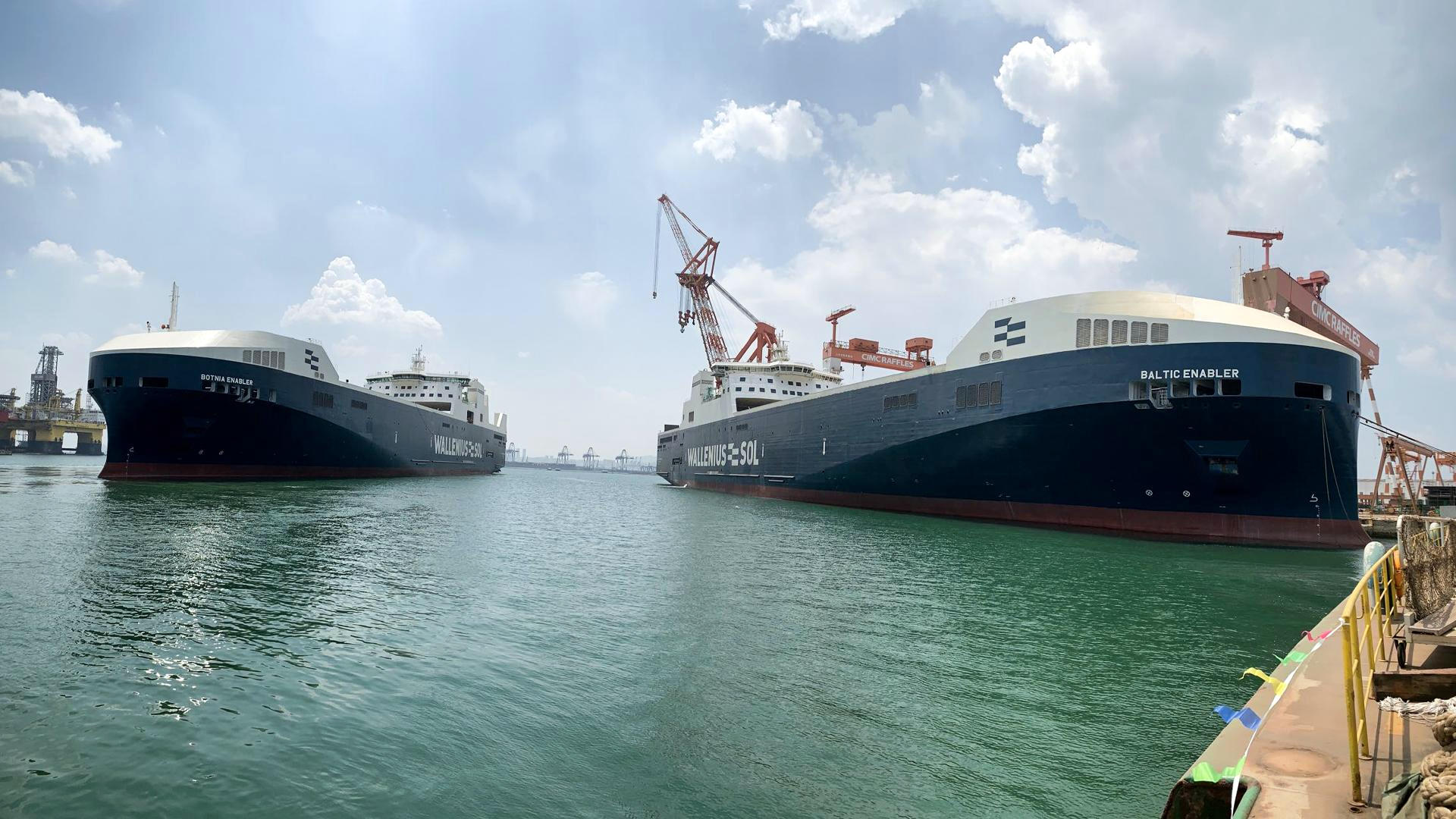
As of October 2025, the ro-ros Baltic Enabler and Botnia Enabler run on the bio instead of the traditional version of liquefied natural gas (LNG).
The supplied bioLNG is produced from Nordic residual streams (agriculture and food production), certified under RED III, and traceable via ISCC.
The switch is part of Wallenius SOL's Climate Roadmap, a pathway to operate entirely on renewable fuels by 2035 towards no harmful environmental impact a decade later. "The transition from LNG to bioLNG is an important milestone for Wallenius SOL. It shows that renewable fuels are not a distant solution but something we can use here and now. Switching to bioLNG for the Enablers is clear proof that our Roadmap is delivering, and that we are investing in our customers' climate goals," underscored Rebecca Tagaeus, Sustainability Officer at Wallenius SOL.
Gasum supplies the bio-bunker under a pooling arrangement. "By aggregating demand from several customers, the arrangement helps scale up supply and build stability in the market. For Wallenius SOL, it provides access to consistent volumes of bioLNG and ensures that the fuel can be introduced in regular operations," the shipping line added in a press brief.
Gasum's Vice President, Maritime, Jacob Granqvist, also commented, "We are very excited that Wallenius SOL has decided to join our FuelEU Maritime pool, as this collaboration enables us to open even more regulation surplus to shipowners. The window for securing compliance for 2025 is closing rapidly and the available capacity may run out before the year end. Pooling is a brilliant and easy opportunity for all maritime actors to join forces in lowering emissions from the industry together."
Photo: Wallenius SOL