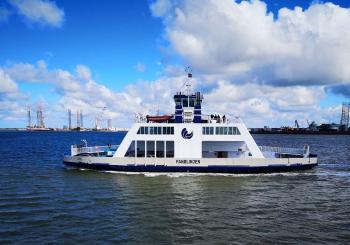
Hvide Sande Shipyard, Steel and Service has commissioned the Bergen-based tech-company to supply its energy storage system (ESS) for the fully electric ferry.
Copenhagen Airports, Maersk, DSV Panalpina, DFDS, SAS, and Ørsted have partnered to develop an industrial-scaled hydrogen and e-fuel production facility in the Greater Copenhagen Area.
Caterpillar (Cat) has entrusted the Japanese-Finnish duo with the delivery of an innovative package of electric drive train technology for a series of bulk carriers.
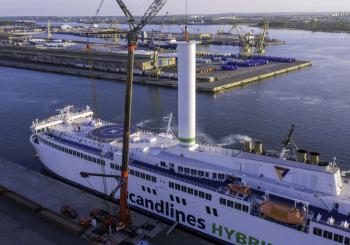
After a few months of preparations, Scandlines' ferry was equipped, within a couple of hours, with Norsepower's Rotor Sail during a scheduled overnight stop in the Port of Rostock.
The Port of Gävle, Gävle Energi, and Statkraft have partnered to investigate the opportunities to produce, store, use, and sell hydrogen as an energy source.
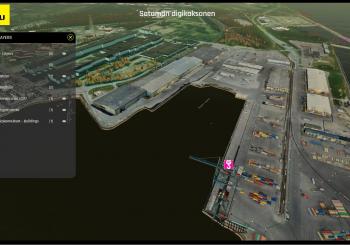
The 5G Momentum project group, an organisation that recognizes Finnish innovators in the field of the next generation wireless technology for digital cellular networks, has chosen the Port Oulu Smarter digitalisation project as the winner.
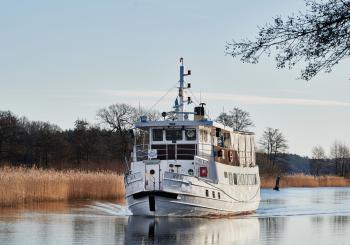
The engine manufacturer Scania and the inland ferry operator Blidösundsbolaget have converted the 1937-built passenger vessel for either joint diesel-electric or purely electric operations.
The Rauma Marine Constructions (RMC) shipyard and Aalto University will jointly work on developing technologies that can improve the environmental and safety aspects of seafaring.
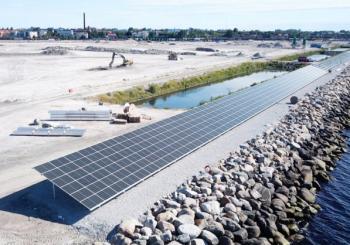
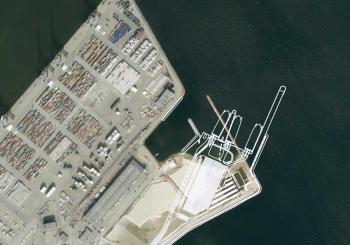
The Danish port, together with the also Danish shipping company Molslinjen, will set up an onshore power supply facility at the currently under construction Østhavnen ferry terminal.