Today's geopolitical landscape is challenging. The number of sanctions promptly imposed against Russia following the full-scale invasion of Ukraine in February 2022 is unprecedented.
As a specialist insurer of international freight transport and logistics operations, TT Club is consistently drawing attention to the ever-changing risk profile of this complex sector.
What is the difference between leopards or tigers and ports? The latter can and often have to change their spots and stripes not to fall from the wheel of (business) life.
New research led by NAPA on Marubeni's fleet has confirmed the value of voyage optimization in reducing ships' emissions and boosting their Carbon Intensity Indicator (CII) performance.
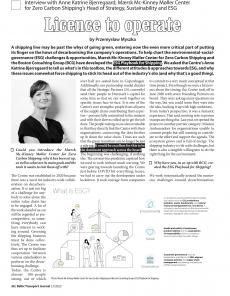
A shipping line may be past the whys of going green, entering now the even more critical part of putting its finger on the hows of decarbonising the company's operations.
As maritime stakeholders evaluate zero-carbon fuel options, the verification of carbon intensity, as well as the full lifecycle impact of these fuels, will present a significant challenge.
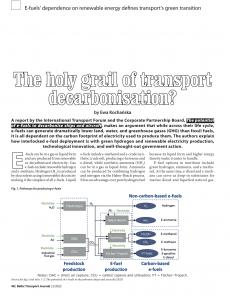
A report by the International Transport Forum and the Corporate Partnership Board, The potential of e-fuels to decarbonise ships and aircraft, makes an argument that while across their life cycle, e-fuels can generate dramatically lower land, water, and greenhouse gases (GHG) than fossil fuels, it is all dependent on the carbon footprint of electricity used to produce them.
Shipping has a long history of regulatory interventions to protect the environment, from the London Convention to MARPOL, through the Ballast Water Convention, and now the Energy Efficiency Existing Ship Index (EEXI) and the Carbon Intensity Indicator (CII).