In the race to decarbonise the maritime industry - which science and society are demanding as more and more urgent - all maritime stakeholders must play their part.
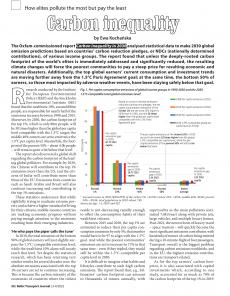
The Oxfam-commissioned report Carbon inequality in 2030 analysed statistical data to make 2030 global emission predictions based on countries' carbon reduction pledges, or NDCs (nationally determined contributions), of various income groups.
The coronavirus pandemic has seen widespread international restrictions, including travel bans and port closures that forced the crew to stay longer at sea - some working many months beyond their contracts.
At the IANA Expo 2021, I had the pleasure of sitting on the automation panel with several distinguished and undoubtedly more experienced professionals. The conversation ranged from practical steps toward automating today to innovations that will come to shape the industry in a decade.
Members of the Baltic Ports Organization (BPO) Digitalization Working Group met at the beginning of June to discuss the recent developments related to the digitalization process in the Baltic ports.
The Baltic Ports Organization (BPO) has recently finalized a new report* focusing on the influence of the European Green Deal (EGD) and various other climate-related policies and regulations on the future of the port sector (the report will be made available per request upon contact with the BPO Secretariat).