The venue of the ECG Spring Congress and General Assembly is always carefully chosen, as the Association's members gather to talk about what the past months resulted in and what the future may bring about, as well as to celebrate the end of another course of the highly-acclaimed ECG Academy.
In July the BTJ team embarked on the first trip to the Baltic ports in order to get a closer look at how they operate, what they specialize in, and find out more about their surroundings.
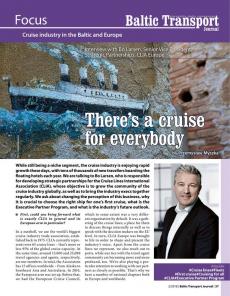
While still being a niche segment, the cruise industry is enjoying rapid growth these days, with tens of thousands of new travellers boarding the floating hotels each year.
As evidenced by the well-publicised ransomware attacks on major transport organisations, including
majors like A.P. Møller-Mærsk Group and TNT, cybercrime has become increasingly commonplace within the global supply chain.
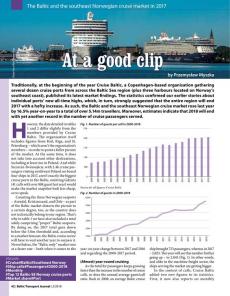
Traditionally, at the beginning of the year Cruise Baltic, a Copenhagen-based organisation gathering several dozen cruise ports from across the Baltic Sea region (plus three harbours located on Norway’s southeast coast), published its latest market findings.
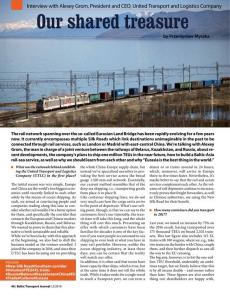
The rail network spanning over the so-called Eurasian Land Bridge has been rapidly evolving for a few years now. It currently encompasses multiple Silk Roads which link destinations unimaginable in the past to be connected through rail services, such as London or Madrid with east-central China.
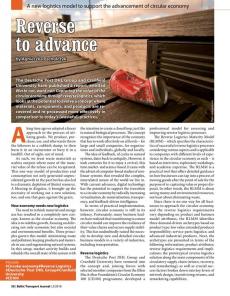
The Deutsche Post DHL Group and Cranfield University have published a report, entitled Waste not, want not: Capturing the value of the circular economy through reverse logistics, which looks at the potential to evolve a concept where materials, components, and products are recovered and re-processed more effectively in comparison to today’ (wasteful) practices.