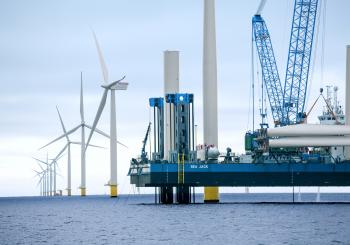
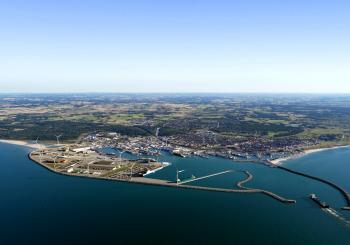
The Danish energy company and the Polish seaport have teamed up to work on remotely piloted & autonomous systems (vehicles, drones), robotics, as well as develop Poland's offshore wind industry.
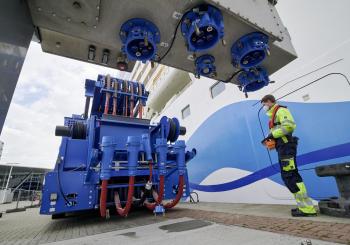
The 20 MVA onshore power supply (OPS) facility, located in Rostock-Warnemünde and completed in the summer of 2020, was used for the first time on 10 May.
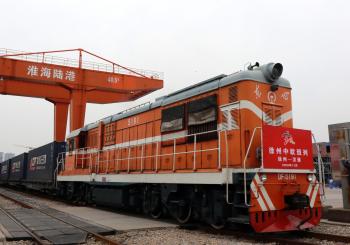
After carrying several test runs since November 2020, the container rail service, organised by Xuzhou-Europe Railway Express, has become regular, with two trips per month.
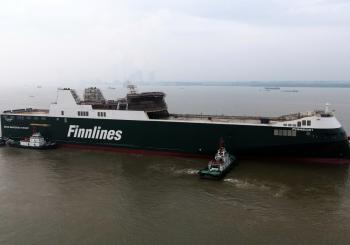
The first in a series of three brand-new ro-ros has been launched at the Chinese Nanjing Jinling Shipyard and is expected to connect Finland with the Bay of Biscay at the turn of the year.
PKP CARGO CONNECT, Duisburg Agency, and Samskip have partnered to offer a biweekly service that connects Gliwice in the south of Poland with Hull and Tilbury via Duisburg and Amsterdam.
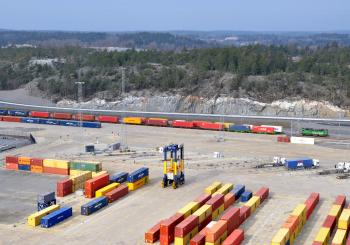
First Row Shipping and Logistics has put in place a 1,400 km-long round trip service that sees CFL Cargo Sweden-operated trains carrying up to 72 twenty-foot containers once per week between Piteå and Gothenburg.