The business of shipping goods over the sea is still considered as a rather conservative industry, not inclined to reinvent itself unless some big, disruptive change comes knocking on its door, say digitalisation most recently.
Digitalization of the maritime industry has been topping the "hot topics" list for a few years now and the interest in who, what, and when will digitally disrupt seaborne trade has been only gaining traction.
The European Sea Ports Organisation (ESPO) released its latest annual report for the 2017-2018 agenda, with fiscal and environmental issues taking centre stage.
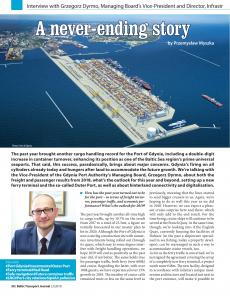
The past year brought another cargo handling record for the Port of Gdynia, including a double-digit increase in container turnover, enhancing its position as one of the Baltic Sea region's prime universal seaports.
The past year brought about a number of developments across the Russian seaborne transport market, most notably in relation to shipping across the Northern Sea Route (NSR) and exports of liquefied natural gas (LNG) from the country's fields in the Arctic.